

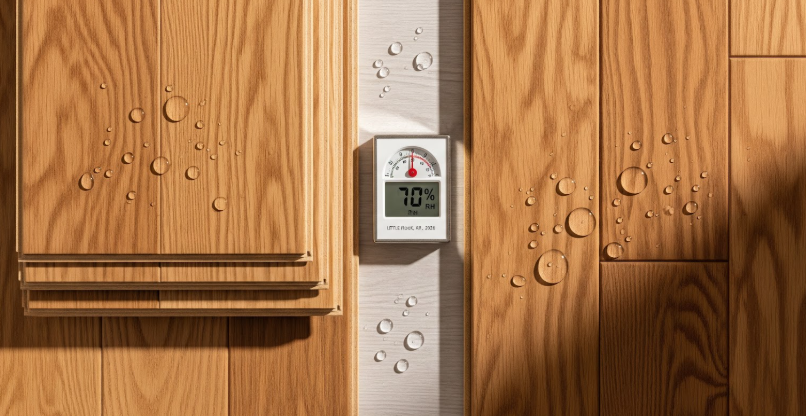
Why Hardwood Choices Matter in Little Rock Homes
Little Rock homes experience a full spectrum of seasonal changes—cool, damp winters, warm springs, and long, humid summers. That humidity swing has a bigger effect on hardwood floors than many people realise. If you’ve ever seen cupping, gapping, or boards shifting slightly throughout the year, moisture movement is usually the reason.
Choosing between engineered hardwood and solid hardwood isn’t only about style or budget. It’s also about how well the floor will perform in Arkansas’ moisture-heavy climate, how stable it stays across seasons, and how easily it fits your home’s layout (including slab foundations, crawlspaces, and second floors).
Before you make a big flooring decision, it helps to understand exactly how these two materials behave. And if you’re starting to explore hardwood options for your Little Rock home, Southern Floor Co. can help you compare each type based on lifestyle, construction, and long-term performance.
What Humidity Does to Hardwood Floors
Hardwood—even high-quality, well-finished hardwood—is a natural product that reacts to moisture. When humidity rises, boards take on moisture and expand. When humidity drops, they release it and contract. That constant push and pull is why Arkansas homeowners sometimes run into seasonal flooring issues.
Here’s how humidity can show up in real homes:
Seasonal Gaps
During drier winter months, boards may shrink slightly, creating thin gaps. This is normal but can be more noticeable in older solid hardwood.
Cupping
High summer humidity—or moisture rising from a crawlspace or slab—can cause boards to absorb moisture unevenly and lift at the edges.
Buckling
In extreme moisture events, wood can swell so much that boards lift from the subfloor.
These issues don’t mean hardwood is a bad choice. They simply highlight the importance of choosing the right type of hardwood for Arkansas’ climate. Engineered and solid hardwood respond differently, and understanding their construction makes the decision much easier.
How Solid Hardwood Is Built (And Why It Behaves the Way It Does)
Solid hardwood is exactly what it sounds like—a single piece of natural wood milled into a plank. That continuous grain pattern gives it classic beauty and a long lifespan.
Why People Love Solid Hardwood
Authentic, timeless look
Can be refinished multiple times
Adds long-term value to the home
Comes in a wide range of species and stains
Solid hardwood has been the gold standard for generations. It’s stunning and durable, but it comes with specific needs in humid regions like Little Rock.
Where Solid Hardwood Performs Best
Homes with stable humidity do well with solid hardwood, especially when paired with careful installation. It’s ideal for:
Traditional living rooms and dining rooms
Bedrooms with consistent climate control
Homes built on crawlspaces with proper moisture barriers
Where Solid Hardwood Struggles
Because it expands and contracts more than engineered wood, solid hardwood is less ideal for:
Concrete slab foundations
Basements
High-humidity rooms
Homes without regular climate control
Rooms with wide temperature swings
When Arkansas humidity is at its peak, solid hardwood needs stability and thoughtful installation to stay in top shape.
How Engineered Hardwood Is Built (And Why It's a Humidity-Smart Option)
Engineered hardwood is made with a real hardwood veneer on top and multiple layers of cross-stacked wood underneath. This layered construction is specifically designed to stay stable in changing moisture conditions.
Why Engineered Hardwood Stays More Stable
The layers underneath the hardwood surface are arranged in alternating directions. This criss-cross pattern keeps the plank from expanding or contracting dramatically when humidity rises or falls.
Key Benefits of Engineered Hardwood
Better stability in humidity
Works well over concrete slabs
Ideal for homes with open layouts
Suitable for second floors and basements
Comes in the same species and finishes as solid hardwood
You still get the beauty of real wood, but with added protection against Arkansas’ moisture levels.
Where Engineered Hardwood Performs Best
Homes built directly on slabs
Areas with fluctuating humidity
Basements or lower levels
High-traffic living spaces
Open floor plans where stability matters
In Little Rock’s climate, many homeowners choose engineered hardwood simply because it’s more forgiving year-round.
Appearance: Do Engineered and Solid Look Different?
Modern engineered hardwood can look indistinguishable from solid hardwood. Both come in:
Oak, hickory, maple, walnut, and more
Smooth, wire-brushed, distressed, or hand-scraped textures
A full spectrum of stains
Wide-plank and narrow-plank styles
The key difference is underneath the surface, not on it.
If your goal is a beautiful real-wood look, both options deliver equally well.
Durability: How Each Type Handles Daily Life
Durability isn’t just about how tough the wood is—it’s also about how it handles foot traffic, pets, and furniture movement.
Solid Hardwood Durability
Solid hardwood is durable but depends heavily on wood species and finish type. The ability to sand and refinish multiple times gives it long-term staying power.
Engineered Hardwood Durability
Engineered hardwood is just as durable on the surface, with added stability against humidity. Some engineered floors can even be refinished once or twice, depending on veneer thickness.
Everyday Performance
In homes with kids, large dogs, or heavy foot traffic, both options perform well. The bigger question is how well each holds up against your home’s humidity patterns—not the daily wear.
Installation Differences That Matter in Arkansas
Installation impacts long-term flooring performance, especially in humid climates.
Engineered Hardwood Installation Flexibility
Engineered wood works with multiple installation methods:
Floating installation
Glue-down
Staple-down
This versatility makes it ideal for homes with mixed subfloors or concrete slabs.
Solid Hardwood Installation Requirements
Solid hardwood typically requires:
Nail-down installation
A wooden subfloor
Strict moisture control
It’s less flexible, but in the right conditions, solid hardwood lasts for decades.
Cost Differences: Not Just About the Price Per Square Foot
Solid hardwood often costs more upfront due to the all-wood construction and longer installation time. Engineered hardwood can be more budget-friendly but varies widely based on veneer thickness and core quality.
However, ongoing costs matter, too:
Homes with humidity issues may need more maintenance with solid hardwood.
Engineered hardwood may offer better long-term stability, preventing moisture-related repairs.
Choosing based on climate conditions—not just price—saves money over time.
What to Choose for Slab Foundations in Little Rock
Most homes built on concrete slabs benefit from engineered hardwood because it can be glued down directly and handles slab moisture more efficiently.
Solid hardwood typically requires:
A raised subfloor
Proper moisture testing
Extra installation planning
Engineered hardwood simplifies the process without sacrificing beauty.
What to Choose for Crawlspace Homes
Crawlspace homes are common in older Little Rock neighbourhoods. Both engineered and solid hardwood can work well—but moisture control is important.
If the crawlspace is:
Fully encapsulated
Equipped with moisture barriers
Properly ventilated
solid hardwood is a strong option.
If moisture levels fluctuate, engineered hardwood provides extra peace of mind.
Refinishing: How Many Times Can You Refresh Each Type?
Solid Hardwood
Can be refinished multiple times and last 50–100 years with care.
Engineered Hardwood
Refinishing depends on veneer thickness:
Thick veneer: 1–2 refinishes
Thin veneer: may not be refinishable
Most homeowners don’t refinish floors often, so this may not be the deciding factor it once was.
How to Decide: The Simple Breakdown
Both options bring beauty and long-lasting quality to a Little Rock home. The best choice depends on your foundation, humidity, and lifestyle.
Choose Solid Hardwood If You Want:
A lifetime floor that can be refinished many times
A traditional feel
Installation over a wood subfloor
Stable indoor humidity
Choose Engineered Hardwood If You Want:
Better moisture stability in Arkansas’ climate
Installation over a slab
Wider planks without risk of cupping
Lower maintenance across the seasons
If you’d like to explore more styles and compare options that match your home, it helps to browse different species and finishes. You can look through a curated collection of hardwood flooring anytime: hardwood flooring.
Create a Beautiful, Climate-Ready Home with the Right Hardwood Choice
Hardwood flooring adds warmth, character, and long-term value to any Little Rock home—but choosing the right type makes all the difference in our humid climate. Both engineered and solid hardwood can perform beautifully when selected with your home’s structure and moisture levels in mind. With thoughtful guidance and quality installation, you can enjoy a floor that looks stunning and feels comfortable season after season.
If you’re ready to compare samples, talk through options, or plan your project, feel free to reach out to us. Our team is here to help you make the right choice with confidence.


