

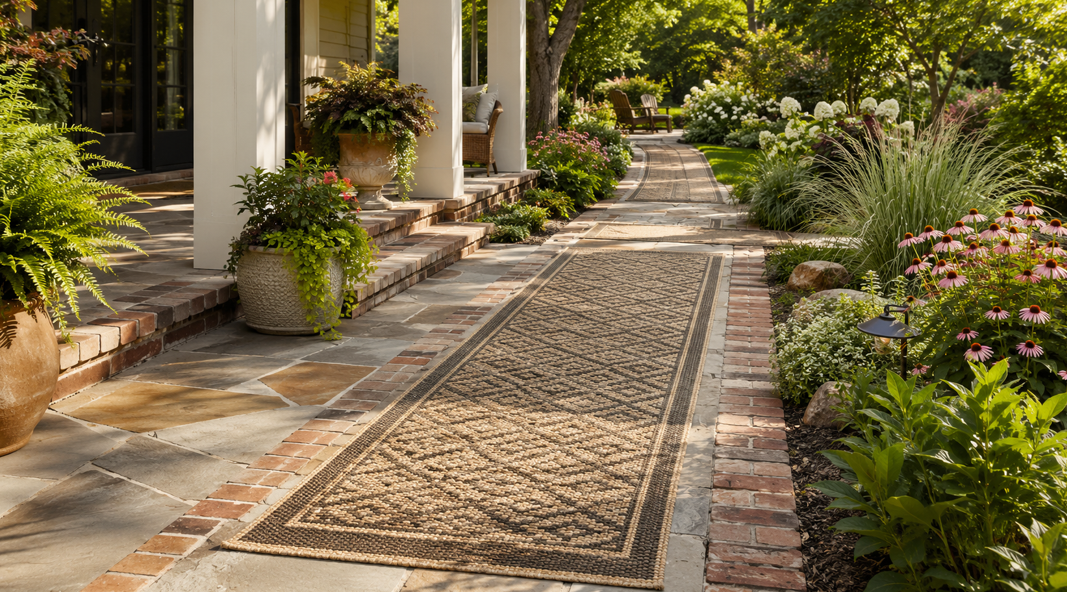
Make Outdoor Walkways Feel More Finished and Comfortable
A garden path does more than connect one part of the yard to another. It guides guests, creates a sense of order, and helps outdoor spaces feel intentional. In Arkansas, though, anything placed along a frequently used outdoor walkway has to deal with more than appearance. Summer heat, bright sun, humidity, rain, tracked-in dirt, leaves, muddy shoes, pets, and regular foot traffic can all put a rug to the test.
That is why the best rug for a garden pathway is not simply the one with the most attractive pattern. It needs to be made for the conditions it will face.
Homeowners looking for materials that coordinate with patios, porches, walkways, and other living spaces can explore options with Southern Floor Co.. A well-chosen outdoor rug can add color and softness while making a path or transition area feel connected to the rest of the home.
For Arkansas conditions, start with a rug specifically rated for outdoor use. Prioritize durable fibers, a low-profile construction, manageable care, and manufacturer-stated UV or fade resistance when the area receives strong sun. Synthetic outdoor rugs commonly use polypropylene, polyester, nylon, or olefin because these materials can provide durability and easier maintenance.
The right choice also depends on where the rug will sit, so match the material, weave, size, and care needs to the actual location.
Start with the Conditions Your Pathway Actually Faces
Before choosing a color or pattern, spend a little time observing the space. Outdoor rugs perform best when they are selected for real conditions instead of an idealized version of the yard.
How Much Direct Sun Hits the Area?
Arkansas summers bring strong heat and sun, making fade resistance an important feature for exposed rugs. The University of Arkansas Division of Agriculture regularly warns residents about high summer temperatures.
If a pathway gets direct afternoon sun, look for a product whose manufacturer specifically identifies it as UV-resistant or fade-resistant. A covered porch may receive less exposure, but it is still worth noting where direct light reaches the rug during the day.
How Often Does the Rug Get Wet?
Think about rainfall, sprinklers, garden hoses, pool traffic, and drainage.
If a rug will regularly get wet, the material needs to be suitable for those conditions, and the surface beneath it needs a chance to dry. A rug that stays damp for long periods can collect dirt and organic debris and may become harder to maintain.
Manufacturer care instructions matter here. Some outdoor rugs can be rinsed with a hose, while others call for spot cleaning. Lowe's current outdoor-rug guide recommends checking the care label because cleaning methods vary by material, construction, and backing.
How Much Foot Traffic Does the Path Carry?
A decorative side path used once a week has very different needs from the route between a back door and patio that everyone crosses several times a day.
For a busy pathway, favor durable construction, a lower pile, and a surface that does not easily trap leaves or grit. If children and pets regularly use the area, stain resistance and straightforward cleaning become even more valuable.
Choose a Material That Can Handle Outdoor Living
Material is one of the biggest factors in how an outdoor rug responds to heat, moisture, stains, and frequent use.
Polypropylene: A Practical All-Around Option
Polypropylene is common in outdoor rugs because it can combine durability with manageable care. Lowe's identifies it as a strong all-around option for patios, decks, and high-traffic spaces, with many products designed to resist moisture, stains, mold, and mildew.
It is worth considering for garden paths and porch transitions where shoes may bring in dirt or moisture. Many polypropylene rugs also use flatwoven or low-profile constructions that are easier to clear of garden debris.
Still, the fiber name alone is not a guarantee. Check the actual rug's outdoor-use rating, UV or fade-resistance claims, and cleaning directions.
Polyester: Strong Color and Outdoor Versatility
Polyester can be another good option, particularly when color retention is a priority. Lowe's notes that polyester outdoor rugs are often selected for fade resistance and can work well in sunny areas and active households.
If you want a colorful runner or a pattern that helps define a garden route, polyester may offer plenty of design flexibility.
Cleaning instructions can vary, so do not assume every polyester rug can simply be hosed down. Some are better suited to vacuuming and spot cleaning.
Natural Fibers: Attractive, but More Location-Sensitive
Natural-fiber rugs can bring warmth and texture to outdoor-adjacent spaces, but they generally require more protection from prolonged moisture.
Jute and sisal, for example, may be better suited to a covered porch or protected transition area than an exposed garden path. Lowe's recommends using natural-fiber outdoor rugs in more sheltered settings because excessive moisture and direct exposure can make maintenance more demanding.
If the look of natural fiber appeals to you but the walkway is exposed, consider an outdoor-rated synthetic rug designed to create a similar woven appearance.
Favor Low-Profile Construction for Busy Paths
Pile height and weave can matter just as much as fiber.
A thick, plush rug may feel wonderful indoors, but a garden pathway has a different job. Shoes bring grit. Leaves fall. Pollen settles. Pet hair collects. Outdoor furniture, planters, or doors may also need to move across or near the rug.
Flatweave Can Make Everyday Care Easier
Flatwoven and low-pile outdoor rugs are popular for active spaces because debris tends to sit closer to the surface instead of disappearing into deep fibers. Several current outdoor polypropylene rugs marketed for high-traffic areas use flat or very low pile constructions and are designed for easier rinsing and drying.
For a pathway, that slimmer profile can also create a cleaner transition between the rug and the surrounding hard surface.
Think About Door Clearance
If the pathway leads directly to an exterior door, check the clearance before buying.
A rug can look perfectly sized yet interfere with a storm door, screen door, or gate. Measure both the available floor space and the vertical clearance.
Avoid Creating a Trip Point
A rug on a walking route needs to lie flat and stay appropriately positioned. Corners that curl or edges that shift can become inconvenient on a heavily used path.
Follow the rug manufacturer's guidance on placement and any compatible rug pad or outdoor underlay. The surface beneath the rug also needs to be suitable for that setup.
Match the Rug to the Surface Underneath
Outdoor rugs are shown on pristine patios in product photos, but real Arkansas homes use many different surfaces. The base beneath the rug affects how well it lies, drains, and dries.
Concrete, Pavers, and Stone
Concrete can provide a firm base for an outdoor runner or area rug, but moisture and debris still need attention. After rain or cleaning, let the rug and the surface beneath it dry fully.
Pavers and stone can work too when they create a stable, reasonably even surface. If the path already has raised edges, loose pavers, or drainage problems, address those issues rather than using a rug to conceal them.
Covered Porches and Decks
Covered porches usually reduce direct exposure to rain and full-day sun, which can open up more design choices. Humidity, pollen, wind-blown rain, and dirty shoes still matter, so the rug should be suited to the actual level of outdoor exposure.
On wood or composite decking, follow both the rug and decking manufacturer's care instructions. Lift the rug periodically when needed so the rug and surface underneath can dry and trapped organic debris can be removed.
Use Area Rugs to Define More Than One Outdoor Zone
A garden path does not need one long runner from end to end. When a route connects several outdoor zones, different rug sizes can define each one.
A runner near a covered entry might lead toward a larger rug under patio seating. Southern Floor Co.'s selection of area rugs can help homeowners compare size, texture, pattern, and how a rug relates to nearby flooring and outdoor surfaces.
Choose the Right Shape for the Space
Runners naturally suit long, narrow transitions. Rectangular rugs can anchor seating areas. Round rugs can soften small garden nooks or create a visual pause at the end of a path.
The shape needs to support movement rather than interrupt it.
Size for Furniture and Foot Traffic
For outdoor seating, choose a size that visually connects the furniture instead of leaving a small rug floating in the middle. Lowe's recommends sizing outdoor rugs so at least the front legs of the furniture can rest on the rug.
For pathways, leave enough clear space that the rug does not bunch around planters, furniture legs, gates, or steps.
Use Pattern Strategically
Outdoor spaces can handle pattern well because the surrounding landscape already contains natural variation.
Geometric designs can make a pathway feel more structured. Botanical patterns can echo the garden. Subtle stripes can visually lengthen a narrow route.
Busy patterns may also disguise everyday dust and small bits of debris better than a very light solid color.
Think About Heat and Color Together
Arkansas heat affects how outdoor spaces feel, and color plays a practical as well as decorative role.
Very dark surfaces tend to look dramatic, but they may feel visually heavier in spaces already exposed to intense sun. Light neutrals can make a covered porch or narrow walkway feel more open, although they may show soil and leaf stains more quickly.
Mid-tone colors are often a practical compromise for active outdoor routes.
Work with the Home's Existing Palette
Look at the siding, brick, stone, trim, outdoor furniture, and nearby flooring.
A rug does not need to match these elements exactly. It simply needs enough shared color or undertone to feel connected.
Warm brick and natural stone may work beautifully with rust, tan, olive, navy, or muted gold. Cool gray decking or contemporary siding may pair well with charcoal, blue, soft green, or clean neutral patterns.
Let the Garden Supply Some of the Color
If the yard already has bright flowers, colorful containers, or dense greenery, the rug can play a quieter role.
If the surrounding landscape is mostly neutral, the rug can become a stronger focal point.
This balance keeps the pathway from feeling overly decorated.
Plan for Dirt, Leaves, Pollen, Pets, and Everyday Mess
Outdoor rugs are meant to be lived on. Choosing one that fits your cleaning habits can be just as important as choosing a pattern you love.
Remove Loose Debris Regularly
Shake, sweep, or vacuum the rug as recommended by the manufacturer. Removing grit, leaves, and dirt before they work deeper into the surface can make routine care easier.
The Home Depot recommends regular debris removal and periodic cleaning as part of outdoor rug care.
Clean Spills Promptly
Outdoor meals, drinks, muddy paws, and garden projects can all create spills.
Blot or clean them according to the rug's care instructions rather than waiting for the next full wash. Harsh cleaners are not automatically better and may affect certain fibers or colors.
Let the Rug Dry Thoroughly
If the rug is hose-washable, rinse it as directed and allow it to dry completely. Lowe's outdoor-rug care guidance also recommends full drying after cleaning or heavy rain and periodic rotation to encourage more even wear and sun exposure.
Drying matters on the underside too. If moisture remains trapped between the rug and hard surface, lift the rug so air can circulate.
Rotate When the Layout Allows
One end of a runner may receive stronger sun or much heavier foot traffic than the other. Rotating the rug periodically can help distribute exposure more evenly, provided the shape and pattern still work in the space.
Look for Features That Match High-Traffic Use
Marketing labels can be useful, but focus on specifications that relate to the conditions you actually have.
For a busy Arkansas garden pathway or outdoor transition, consider looking for:
Outdoor-use rating: Confirms the rug is intended for exterior conditions.
UV or fade resistance: Particularly useful where the rug receives direct sun.
Stain resistance: Helpful near grills, dining areas, pets, and garden work zones.
Moisture-friendly construction: Important for uncovered areas.
Low pile or flatweave: Can simplify debris removal and reduce bulk on a walkway.
Easy-care instructions: Choose maintenance you will realistically keep up with.
Appropriate backing: Make sure the backing and any rug pad are suitable for both the rug and the surface underneath.
Size and edge stability: The rug needs to fit the path without obstructing doors, stairs, or narrow walking areas.
No single feature makes a rug perfect for every location. The strongest choice is the one whose construction and care requirements align with the real conditions around your home.
Make the Pathway Feel Connected to the Rest of Your Home
Durability matters, but the rug still needs to look like it belongs.
Think about what the pathway connects. A route from a back door to a patio may need a casual runner, while a covered front entry may suit a more structured border or geometric pattern. Garden seating areas can handle softer woven textures and botanical designs.
Use the house itself as a guide. Brick, stone, siding, trim, outdoor furniture, and nearby flooring all provide colors and undertones that the rug can echo. A rug does not need to match these finishes exactly. One or two shared colors are often enough to make the space feel connected.
You can also repeat an interior accent color outdoors to create visual continuity between the home and the garden. The materials still need to suit exterior conditions, but the design can feel like a natural extension of the rooms inside.
Choose for Arkansas Conditions, Then Choose the Look You Love
A garden pathway rug needs to earn its place outdoors.
For a high-traffic Arkansas setting, start with performance. Look for an outdoor-rated material, consider UV and fade resistance for sunny locations, choose a construction that is manageable to clean, and make sure the rug can dry appropriately after rain or washing. Polypropylene and polyester are common synthetic options, while natural fibers generally make more sense in protected locations.
Then move to design.
Choose a size that supports the way people actually walk through the space. Use runners for narrow transitions and larger rugs where the path opens into seating or dining areas. Coordinate the color and pattern with the home, landscaping, furniture, and nearby flooring rather than treating the rug as a separate decorative decision.
Most importantly, read the specifications of the individual rug. “Outdoor” is a broad category, and different products have different exposure and cleaning recommendations.
For homeowners across Hot Springs Village, Hot Springs, Little Rock, Malvern, Benton, Bryant, and surrounding Arkansas communities, the right rug can make a practical outdoor route feel more welcoming without demanding constant attention.
Southern Floor Co. can help you compare rug styles and coordinate them with the floors and surfaces that shape the rest of your home. If you are looking for the right rug for a garden path, porch, patio, or high-traffic transition area, get in touch with the team for help narrowing down options that fit your space, style, and everyday needs.


