

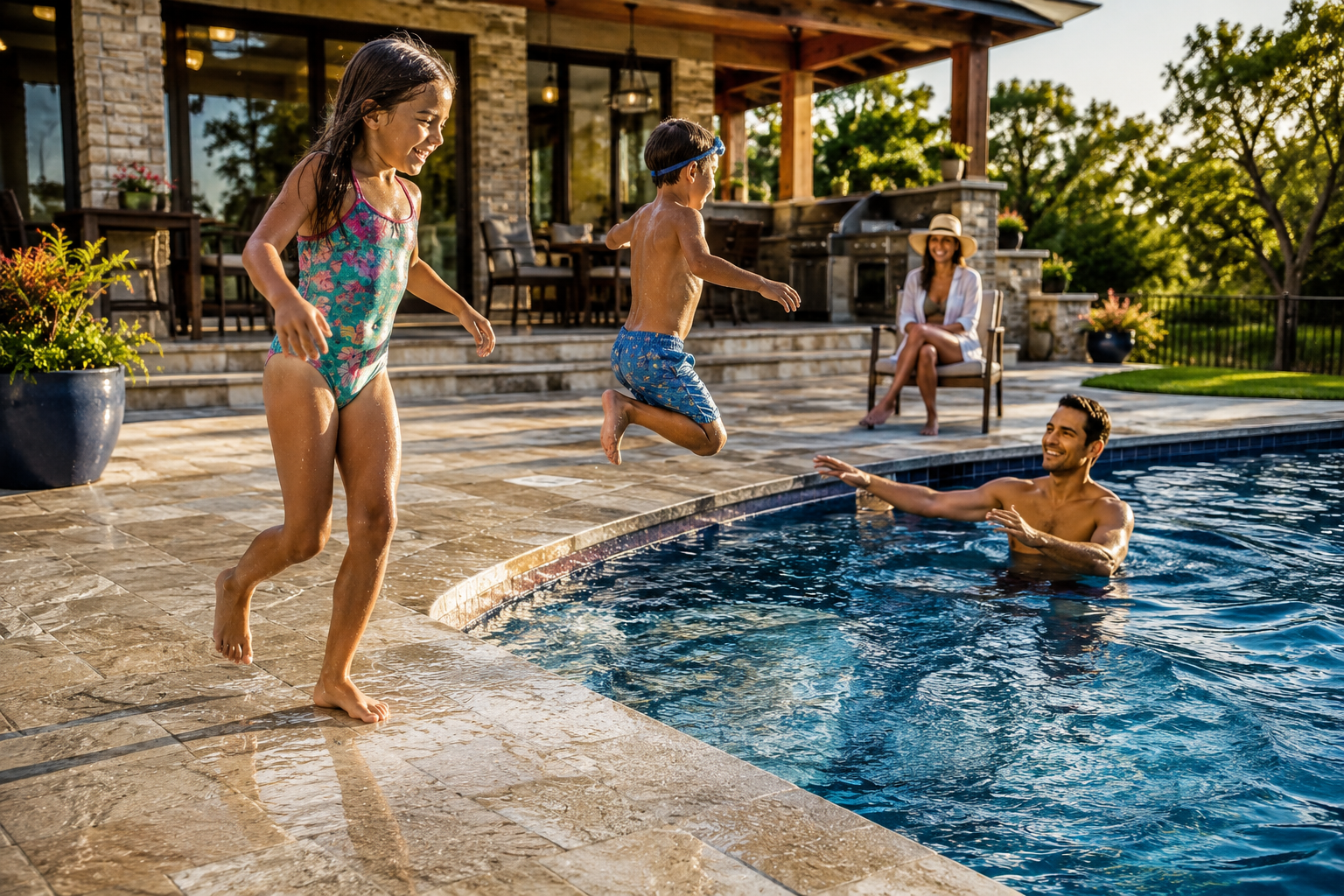
Why the Finish Matters as Much as the Stone
A natural stone pool deck or patio can completely change the way an outdoor space feels. Stone brings color variation, texture, and a sense of permanence that works beautifully around pools, covered patios, outdoor kitchens, and backyard entertaining areas.
For homeowners in Bryant, Arkansas, however, appearance is only part of the decision.
Outdoor surfaces can be exposed to pool water, rain, wet feet, grass clippings, dirt, sunscreen, food spills, and constant movement between the house and yard. Around a swimming pool in particular, choosing the right surface texture deserves careful attention.
That does not mean looking for a material advertised as completely “non-slip.” No hard surface can guarantee that someone will never slip. A better goal is to choose slip-resistant natural stone with a finish appropriate for wet outdoor use, then support it with thoughtful drainage, maintenance, and installation.
Homeowners planning outdoor projects can work with Southern Floor Co. to compare materials based on where they will be installed, how much water the area receives, the look they want, and the amount of everyday traffic the space needs to handle.
Think About How the Area Will Be Used
Before choosing a finish, picture a normal summer afternoon.
Will children be moving between the pool and patio? Will guests carry drinks from an outdoor kitchen? Will the surface receive direct afternoon sun? Does the deck connect to steps or a sloped walkway? Will leaves and lawn debris regularly land on the stone?
Those details affect the flooring decision.
The ideal outdoor stone surface combines several qualities:
Appropriate traction for the intended area
Comfortable texture underfoot
Suitability for exterior exposure
Practical maintenance
A finish that complements the home
Proper drainage
Durable installation
The stone itself matters, but the way its surface is finished can make a significant difference in how it feels and performs.
What Does “Slip-Resistant” Really Mean for Outdoor Stone?
Slip resistance is more complex than labeling one surface “safe” and another “slippery.”
The amount of traction available underfoot can change based on water, dirt, cleaning products, oils, footwear, slope, surface wear, and other conditions. The Tile Council of North America also emphasizes that dynamic coefficient of friction, or DCOF, is useful for evaluating hard-surface flooring, but DCOF and overall slip resistance are not identical concepts.
Texture Helps, but It Is Not the Whole Story
Outdoor stone generally benefits from a finish that creates some surface texture rather than an extremely smooth, highly polished face.
That texture can provide more contact and grip under typical outdoor conditions. Still, a textured stone surface can become more slippery if algae, grime, leaves, oils, or other contaminants accumulate.
This is why material selection and maintenance go together.
Ask About Testing Where It Is Available
When comparing stone or other hard-surface materials for areas expected to become wet, ask whether the specific product and finish have relevant slip-resistance or DCOF test information.
Standards for hard-surface flooring can provide useful performance information, but the suitability of a material still depends on the specific installation. The Natural Stone Institute notes that slip resistance is among the performance characteristics that may be relevant when evaluating stone for a project.
For residential pool decks, patios, steps, and walkways, it is also sensible to consider applicable local building requirements and the recommendations of the material supplier and installer.
There Is No Substitute for the Right Application
A stone that works beautifully on a covered patio may not automatically be the best choice directly beside a pool.
The finish, stone type, slope, drainage, and exposure all deserve consideration together.
1. Flamed Finishes: Strong Texture for Outdoor Areas
A flamed finish is one of the textured options homeowners may encounter when researching exterior stone.
The finishing process creates a rougher, more textured face than a polished surface. Granite is available in flamed finishes as well as several other exterior-oriented textures, according to Natural Stone Institute materials.
Why Consider a Flamed Surface?
The texture can make it appealing for spaces such as:
Pool surrounds
Patios
Outdoor walkways
Steps
Entertaining areas
Garden paths
It also maintains the natural character of stone while creating a less glossy appearance.
For a Bryant backyard with a pool and active family use, that combination can be attractive: the area can look refined without feeling like an indoor polished floor was simply extended outside.
Consider Comfort Under Bare Feet
More texture is not automatically better in every location.
Pool decks are frequently walked on barefoot, so homeowners can benefit from physically feeling a sample before selecting a heavily textured finish.
Ask yourself:
Does the surface provide noticeable texture?
Is it comfortable enough for bare feet?
Will children regularly sit or play directly on it?
Does the texture fit the style of the surrounding patio?
The goal is to find an appropriate balance between traction and everyday comfort.
2. Sandblasted Finishes: A Subtle Textured Look
A sandblasted finish creates another type of textured stone surface.
Rather than producing the glossy reflection associated with polishing, sandblasting gives stone a softer, more matte appearance. Sandblasted finishes are among the finish options available for several natural stones.
Why It Works Visually Outdoors
Sandblasted stone can complement homes where the design calls for a more understated surface.
It can pair well with:
Traditional brick
Painted siding
Natural wood
Outdoor fireplaces
Neutral pool finishes
Contemporary landscaping
Because the finish is not highly reflective, it can also feel visually natural in a backyard environment.
Compare Samples When Wet
Looking at a dry showroom sample tells only part of the story for a pool or uncovered patio.
Ask the flooring professional whether you can evaluate an appropriate sample under conditions that better reflect its intended use. Seeing how the color, texture, and appearance change when wet can help you make a more informed choice.
Natural stone varies from piece to piece, so sample variation is also part of its appeal.
That natural variation can help create an outdoor surface with character rather than a perfectly uniform appearance.
3. Bush-Hammered and Heavily Textured Stone for High-Traffic Areas
Bush-hammered stone has a visibly textured surface created through mechanical finishing.
It can provide a rugged, architectural appearance that feels particularly appropriate in outdoor landscapes.
Where a Heavier Texture Can Make Sense
A pronounced surface texture may be useful to consider for:
Walkways
Steps
Pool transitions
Garden paths
Areas with frequent foot traffic
Granite, for example, can be supplied in bush-hammered, flamed, sandblasted, and other textured finishes.
Think About More Than Traction
A deeper texture can affect maintenance.
Small pockets in heavily textured surfaces may collect dirt or organic debris more readily than smoother finishes. That does not automatically make the finish unsuitable, but it is worth considering how the area will be cleaned.
A homeowner with a heavily landscaped yard may have different maintenance needs from someone with a simple pool terrace surrounded mostly by hardscape.
This is a good example of why outdoor stone selection works best when the discussion includes your entire property rather than a sample viewed in isolation.
4. Honed Stone: Smooth-Looking Without a High Polish
A honed finish provides a smoother, matte appearance.
It can be attractive for patios and certain outdoor applications because it gives natural stone a refined look without the mirror-like shine of polishing.
Where Honed Stone Can Shine
A honed finish can work beautifully in:
Covered patios
Outdoor entertaining areas
Transitional indoor-outdoor spaces
Outdoor kitchens
Areas where a clean, contemporary look is important
The suitability of a particular honed stone around regularly wet areas depends on the stone, finish, and project conditions.
That distinction is important.
“Honed” describes the surface finish, not a universal level of slip resistance.
Compare the Exact Stone and Finish
Two stones with a honed finish can feel very different underfoot.
The underlying stone type, surface characteristics, fabrication, and maintenance all affect performance.
When browsing natural stone flooring, compare the specific finish and application rather than choosing based only on the stone name.
If the installation includes both a covered patio and an exposed pool surround, it may even make sense to discuss whether different finishes or materials are appropriate for different zones while keeping the overall design coordinated.
5. Why Highly Polished Stone Deserves Careful Consideration Outdoors
Polished stone has undeniable visual appeal.
It can deepen color, emphasize veining, and create a luxurious reflective finish. That is one reason polished marble, granite, and other stones remain popular in interior design.
Around an outdoor pool or constantly wet walkway, however, an extremely smooth surface deserves additional scrutiny.
Indoor Beauty Does Not Always Translate Outdoors
A finish that feels perfect in an entryway or bathroom may face very different conditions outside.
Pool areas introduce:
Standing or splashed water
Bare feet
Sunscreen and body oils
Leaves and grass
Outdoor dirt
Changing weather
For those reasons, homeowners can benefit from prioritizing a surface specifically evaluated and recommended for the outdoor location in question.
Use Style Without Ignoring Function
Choosing a more textured finish does not mean giving up an upscale appearance.
Natural stone already provides visual richness through:
Color variation
Mineral patterns
Veining
Edge details
Paver size
Layout patterns
A beautifully designed outdoor space can feel elegant without relying on a glossy surface.
6. Match the Finish to Each Outdoor Zone
One of the most effective ways to plan an outdoor project is to divide it into zones.
A large Bryant backyard may include a pool deck, covered patio, steps, walkway, outdoor kitchen, and transition into the home. Each area sees different conditions.
Direct Pool Surrounds
The area immediately beside a pool regularly receives water.
Priorities here may include:
Slip-resistant texture
Barefoot comfort
Drainage
Easy routine cleaning
Resistance appropriate for the expected exposure
Also consider how quickly the surface heats in direct sunlight and whether shaded areas remain damp for longer periods.
Patios
A patio may stay comparatively dry, particularly if it is covered.
That can give homeowners more flexibility in texture and visual finish, depending on the project.
Still, consider rain exposure, outdoor dining spills, grill areas, and traffic from the yard.
Steps
Steps deserve particular attention because a change in elevation adds another risk factor.
Consistent tread dimensions, clear edges, appropriate lighting, drainage, and surface traction all contribute to a better-designed step area.
Avoid thinking of the stone finish as the only safety feature.
Walkways
Walkways may encounter sprinkler water, soil, leaves, and grass clippings.
A textured surface paired with proper drainage and routine maintenance can help create a more practical path between outdoor areas.
Outdoor Kitchens
Outdoor kitchens introduce different contaminants, including cooking oils, food spills, and grease.
Stone selection here needs to consider staining and cleaning as well as walking-surface performance.
7. Stone Type Matters Alongside the Finish
A finish cannot turn every natural stone into the same product.
Granite, limestone, travertine, slate, and other stones have different physical characteristics, appearances, porosity, and maintenance needs.
Granite
Granite is widely used in architectural and exterior applications and is available in numerous textured finishes, including flamed, bush-hammered, sandblasted, and honed options.
Its wide finish selection makes it worth exploring for outdoor projects where durability and texture are priorities.
Limestone
Limestone can create a warm, understated outdoor look that complements traditional and transitional homes.
Because limestone varieties differ, evaluate the actual stone proposed for the project rather than making assumptions based only on the general category.
Travertine
Travertine is frequently associated with patios and poolside aesthetics because of its distinctive natural appearance.
Again, product characteristics and finishes vary. Ask about the selected material's exterior suitability, maintenance, and finish rather than treating every travertine product as interchangeable.
Natural Variation Is Part of the Design
Unlike a manufactured surface designed for near-perfect uniformity, stone can vary in tone, movement, markings, and texture.
Reviewing several samples can give you a better idea of the finished installation.
8. Drainage Is a Major Part of Outdoor Safety
Even a thoughtfully selected surface performs better when water has somewhere to go.
Poor drainage can leave puddles on a patio or pool deck and can encourage dirt and organic growth to remain in damp areas.
Look at the Entire Hardscape
Drainage planning may involve:
Surface slope
Deck drains
Pool drainage
Downspouts
Landscaping
Irrigation
Transitions between surfaces
The correct solution depends on the property.
This is one reason installation planning matters just as much as choosing the stone.
Watch Shaded Areas
A sunny area may dry quickly while a section beneath trees or a covered structure stays damp.
Those conditions can change how the same surface behaves across the property.
During the planning process, point out areas that tend to remain wet or collect debris.
That information can help the project team evaluate the installation more realistically.
9. Keep Outdoor Stone Clean to Maintain Its Performance
Outdoor maintenance is not only about appearance.
Dirt, algae, leaves, oils, and other substances on a walking surface can affect traction.
The Natural Stone Institute recommends removing grit and addressing spills appropriately while using cleaning methods suited to natural stone.
Keep Loose Debris Under Control
Sweep leaves, soil, grass clippings, and other debris regularly, especially around pool traffic areas and steps.
Deal With Spills Promptly
Outdoor entertaining can mean drinks, food, cooking oil, and sunscreen finding their way onto the patio.
Address spills promptly using cleaning guidance appropriate for the specific stone.
Avoid Assuming Any Cleaner Is Stone-Safe
Natural stone can react differently to cleaning chemicals.
Follow the care recommendations supplied for the exact stone instead of automatically reaching for a strong acidic or abrasive cleaner.
Consider Sealing on a Product-Specific Basis
Some natural stones and applications may benefit from an appropriate penetrating treatment, while others may have different requirements.
If a sealer is being considered, confirm that the product suits the stone and does not negatively affect walking-surface performance. Natural Stone Institute guidance cautions that surface treatments need to be selected with slip resistance in mind.
10. Questions to Ask Before Choosing Stone for a Bryant Pool or Patio
A strong outdoor flooring decision starts with practical questions.
Before selecting the final material, discuss:
Is this exact stone recommended for exterior use?
Is the finish appropriate for areas that regularly become wet?
How does the surface feel under bare feet?
Is relevant traction or DCOF information available?
How porous is the stone?
What routine cleaning does it require?
Is sealing recommended?
How will drainage be handled?
Will the area receive direct afternoon sunlight?
Are there steps or slopes in the project?
What variation can I expect between pieces?
What installation method is appropriate for the site?
Bring photographs, rough measurements, and information about how you use the backyard when you begin comparing options.
A family pool deck used every afternoon can require a different approach from a decorative covered patio used mainly for weekend dinners.
Create an Outdoor Space That Looks Beautiful and Works for Everyday Life
Natural stone can bring a distinctive, lasting look to a Bryant backyard. The key is choosing it as an outdoor walking surface first and a design sample second.
Start with where the stone will go.
Think about whether the area will be wet, shaded, exposed to intense sunlight, walked on barefoot, used for outdoor cooking, or connected to steps and sloped paths. From there, compare suitable stone types and finishes.
Flamed, sandblasted, bush-hammered, honed, and other finishes can create very different textures and visual effects. There is no single finish that is ideal for every pool deck or patio.
A thoughtful project brings together:
Appropriate surface texture
The right stone for the application
Comfortable barefoot use where relevant
Good drainage
Professional preparation and installation
Practical cleaning
A design that complements the home
That combination creates a space designed for more than looking good in a photograph. It creates an outdoor area ready for summer afternoons, family gatherings, pool days, and everyday life.
Southern Floor Co. can help homeowners compare beautiful, durable stone options with the intended space and lifestyle in mind. If you are planning a natural stone pool deck, patio, walkway, or other outdoor project in Bryant or a surrounding Arkansas community, get in touch to discuss the right direction for your space.


