

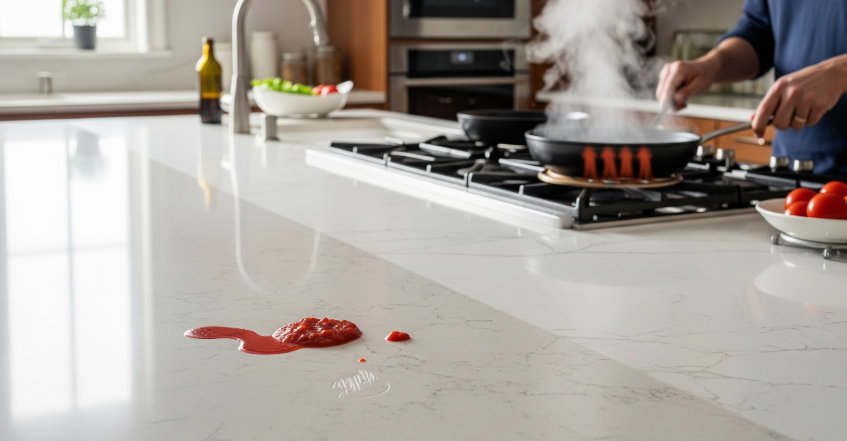
Why Benton Homeowners Love Quartzite for Busy Kitchens
Quartzite has become a go-to choice for Benton homeowners who want a stunning, natural stone countertop that can keep up with real daily activity—kids grabbing snacks, dinner preps running long, hot pans landing on the surface, and the occasional splash of lemon juice or spaghetti sauce. It’s beautiful, durable, and known for its crisp veining and elegant movement, making it a favorite in both modern and traditional kitchen designs.
But with popularity comes confusion. Many shoppers hear conflicting information about heat resistance, etching, sealing schedules, and whether quartzite behaves more like marble or granite. This guide separates real performance facts from the most persistent myths so you can make a confident decision.
If you’re browsing materials and want to compare styles or pricing ranges, the team at Southern Floor Co. can help you explore options that work beautifully in busy Arkansas kitchens.
What Quartzite Really Is
Quartzite is a naturally occurring metamorphic stone created when quartz-rich sandstone is heated and compressed deep within the earth. This process makes quartzite one of the hardest natural countertop materials available.
Key Natural Benefits
High hardness rating: Quartzite often ranks around 7 on the Mohs scale (harder than granite).
Strong scratch resistance: Ideal for families with heavy cookware or rough-and-tumble kitchen routines.
Unique color and veining-patterns: No two slabs are the same, adding sophistication to Benton kitchens.
Excellent heat tolerance: Naturally withstands high temperatures better than many countertop materials.
These traits make quartzite stand out, especially when durability is a priority.
Myth #1: “Quartzite and Quartz Are the Same Thing”
This is one of the most common misconceptions.
The Truth
Quartzite = natural stone
Quartz = engineered surface made with resin + crushed stone
Quartz can discolor under high heat and may scratch more easily. Quartzite performs more like granite—dense, natural, and heat-resistant. If you want the performance of real stone with distinct natural beauty, quartzite is worth considering.
Myth #2: “Quartzite Can’t Handle Heat”
Benton families cook—a lot. From cast-iron skillets to simmering pots, heat resistance matters.
The Truth
Quartzite performs exceptionally well with heat thanks to its natural mineral composition. While it’s always smart to use trivets for long-term care, a quick placement of a hot pan won’t cause the kind of damage seen with synthetic surfaces.
Why Heat Myths Started
Some stones labeled “soft quartzite” or “dolomitic quartzite” aren’t true quartzite. These mixed or mislabeled materials may behave more like marble, so proper identification is key.
Myth #3: “Quartzite Etches as Easily as Marble”
Etching happens when acidic substances—like lemon juice or vinegar—dull or discolor a surface.
The Truth
True quartzite is highly resistant to etching.
However, a few stones sold as “quartzite” aren’t pure quartzite and can etch more like marble.
Practical Takeaway
Real quartzite: Excellent etch resistance
Impure/mislabeled stone: May show etching
This is why slab verification and working with an experienced supplier matters.
Myth #4: “Quartzite Doesn’t Need Sealing”
Some homeowners believe quartzite is totally non-porous and maintenance-free.
The Truth
Quartzite is less porous than marble but still benefits from sealing. A quality sealer helps protect against long-term stains and makes cleaning easier.
Typical Sealing Schedule
Once every 1–2 years for busy Benton kitchens
Darker quartzite often needs less frequent sealing
Daily cleaning stays simple with mild soap or stone-safe cleaner
Sealing is quick, inexpensive, and extends the life of the stone.
Myth #5: “Quartzite Is Too Hard to Fabricate”
Quartzite is extremely dense, which leads some shoppers to believe installation is more complicated.
The Truth
Professional installers handle quartzite regularly.
The hardness simply means it remains durable for decades. A qualified team will cut, finish, and secure the slab without complication.
With Southern Floor Co.’s experience installing a variety of natural stones, you’re guaranteed a smooth, professional result whether your kitchen layout is simple or highly customized.
How Quartzite Performs in Busy Family Kitchens
Benton households juggle pets, kids, guests, and constant family routines. Quartzite stands up to all of it.
Real-World Advantages
Minimal scratching: Harder than most common kitchen materials
High heat endurance: Resists thermal shock better than resin-based products
Stain resistant when sealed: Great for coffee, juice, oils, and sauces
Low maintenance: Quick wipe-downs keep it looking polished
Long-term beauty: Natural veining remains crisp even after years of wear
It’s one of the few stones that delivers both elegance and toughness.
If you want to learn more about other natural stone options, or compare quartzite to granite or marble, you can explore the full range of natural stone flooring and surface materials here: natural stone flooring.
How to Tell Whether You’re Getting “True” Quartzite
Because quartzite is popular, some distributors rename or inaccurately classify stones.
Signs You’re Viewing Real Quartzite
It resists scratching when tested with a steel blade
It cannot be easily etched by acidic liquids
It features glassy, crystalline minerals
It feels denser than marble or dolomite
It typically comes in whites, grays, creams, blues, or earth tones
Always Ask Your Supplier
Is this verified quartzite?
Has the stone been tested for hardness and composition?
Does the slab show consistent characteristics across its surface?
Quality suppliers will have clear answers and documentation.
Sealing Quartzite the Right Way
While quartzite doesn’t demand intense maintenance, sealing improves overall performance and protects against long-term staining.
How to Seal Quartzite Properly
Clean the surface thoroughly
Apply a stone-safe sealer evenly
Allow it to penetrate for the recommended time
Wipe away any residue
Let the surface cure fully before use
Most Benton homeowners can seal quartzite themselves, but professional sealing ensures even coverage.
How to Know When Resealing Is Needed
Water stops beading on the surface
Dark spots appear after spills
The finish looks duller than usual
A quick reseal restores protection instantly.
Cleaning and Maintenance for the Long Haul
Quartzite kitchens stay beautiful with simple daily habits.
Best Cleaning Practices
Use pH-neutral cleaners
Avoid abrasive pads
Wipe spills quickly
Keep citrus or wine from sitting too long
Clean with soft microfiber cloths
What to Avoid
Vinegar
Bleach
Ammonia-based cleaners
Oil-based soaps
Because quartzite is so tough, maintaining its beauty rarely feels like a chore.
Quartzite vs. Other Natural Stones
Homeowners sometimes compare quartzite to granite or marble. Understanding their differences helps narrow your decision.
Quartzite vs. Granite
Hardness: Quartzite is often harder
Patterns: Granite tends to have speckles; quartzite has sweeping veining
Heat: Both handle heat well
Staining: Both perform well when sealed
Quartzite vs. Marble
Hardness: Quartzite is much harder
Etching: Quartzite resists it far better
Durability: Quartzite is more practical for busy kitchens
Price: Both vary widely depending on rarity
For Benton families who want beauty without the fragility, quartzite usually wins.
Is Quartzite Worth It for Busy Kitchens?
Quartzite combines timeless beauty with strength and reliability, making it one of the best long-term investments for active Benton homes. It’s resistant to heat, scratches, and everyday wear—exactly what a hardworking kitchen needs.
If you’re comparing materials for a remodel or new build, you can always reach out to us to get personalized guidance on selecting and installing natural stone surfaces that match your style, routine, and durability expectations.


