

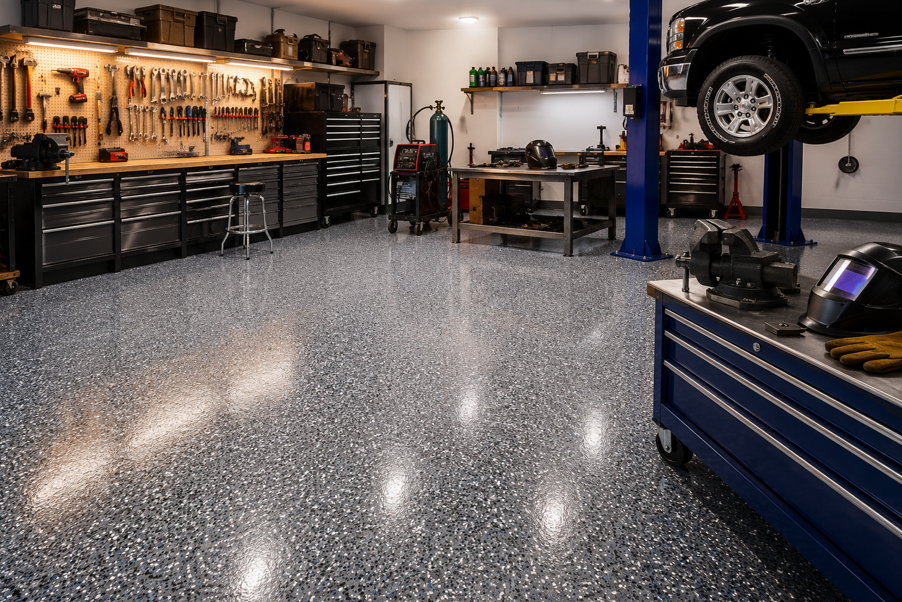
Build a Garage Floor Around the Work You Actually Do
A garage can be much more than a place to park. For many Arkansas homeowners, it doubles as an auto bay, woodworking area, tool room, hobby workshop, equipment storage space, or weekend project headquarters. Once a garage starts doing real work, bare concrete can begin showing the evidence.
Oil spots, automotive fluids, tire traffic, dragged equipment, dropped tools, dust, and repeated cleaning can all affect the floor. That is where a properly selected coating system can make a noticeable difference.
Homeowners working with Southern Floor Co. can explore garage flooring options based on how the space will actually be used instead of choosing a finish based only on appearance.
For workshops and garages, epoxy systems are popular because properly specified products can provide a hard-wearing, seamless surface with resistance to abrasion and various chemicals. Commercial epoxy systems are commonly specified for garages, maintenance workshops, assembly areas, and other spaces exposed to regular mechanical wear.
But “epoxy” does not describe one universal level of performance. Different systems have different thicknesses, surface textures, chemical-resistance characteristics, application requirements, and intended uses.
A floor for occasional parking has different demands from one supporting automotive projects, rolling tool cabinets, welding equipment, floor jacks, or daily workshop traffic. The best place to start is with one question: What will happen on this floor every week?
Once that is clear, durability, surface preparation, traction, finish, and maintenance choices become much easier to evaluate.
Why Epoxy Works Well in Active Garages and Workshops
Epoxy creates a bonded coating over properly prepared concrete. Depending on the system, that coating can help create a more finished surface that is easier to maintain than untreated concrete.
Resistance to Everyday Wear
Workshops create repetitive wear in concentrated areas.
Think about the path between a workbench and tool chest, the wheels beneath a rolling cabinet, tires entering the same parking space every day, or equipment being moved across the floor.
Commercial epoxy products are available specifically for medium- to heavy-duty environments and may offer abrasion and mechanical resistance suitable for garages and maintenance workshops.
The important phrase is properly selected system. A light-duty coating and a more substantial flooring system may both be described as epoxy while performing very differently.
A More Manageable Surface for Spills
Bare concrete is porous. Automotive fluids and workshop spills can soak into unprotected concrete and leave difficult stains.
Certain garage epoxy products are designed to resist substances such as motor oil, gasoline, antifreeze, salt, and other chemicals. Chemical resistance varies by formulation, so product data should be checked against the substances likely to be used in the garage.
A seamless coated surface can also simplify routine sweeping and cleanup because dust and dirt have fewer pores and irregularities to settle into.
A Cleaner, Brighter Workshop Appearance
Function comes first, but appearance matters too.
A coated floor can make an unfinished garage look more intentional. Light or medium-tone floors can also help improve visual contrast around dropped screws, fasteners, hand tools, and other small parts.
Color flakes, solid colors, textured broadcast systems, and gloss levels allow homeowners to choose a finish that suits both the workshop and the rest of the property.
Match the Flooring System to Your Tools and Equipment
Not every workshop puts the same pressure on its floor.
A homeowner restoring motorcycles has different needs from someone building cabinets. A garage used for vehicle maintenance sees different spills and point loads from a space used mainly for gardening equipment.
Rolling Tool Chests and Equipment
Heavy tool cabinets place concentrated loads on relatively small casters. They also follow the same routes across the floor repeatedly.
If rolling storage is a major part of the workshop, discuss mechanical wear and expected loads when selecting the coating system. A tougher floor is especially valuable around benches, storage walls, lifts, and other high-use zones.
Dropped Hand Tools
No coating makes a garage floor indestructible.
Wrenches, hammers, sockets, metal parts, and equipment can still chip, scratch, or damage a coating depending on their weight, shape, and how far they fall.
For a workshop where impacts are common, focus on a system specifically intended for heavier mechanical use rather than choosing solely by color or gloss.
Floor Jacks, Stands, and Vehicle Equipment
Vehicle maintenance can create concentrated pressure at contact points.
Discuss the use of floor jacks, jack stands, lifts, motorcycle stands, or other heavy equipment before the coating system is specified. Installation professionals can then consider whether the planned system and concrete substrate are appropriate for the expected use.
The condition of the concrete beneath the coating matters as well. A durable finish cannot compensate for a weak, badly damaged, or poorly prepared substrate.
Treat Welding as a Separate Safety Consideration
A workshop used for welding deserves special attention because welding introduces heat, sparks, and hot slag.
An epoxy coating should not be treated as a substitute for welding shields, fire-resistant protection, or established hot-work safety procedures.
Sparks and Hot Metal Change the Risk
For workplaces covered by OSHA requirements, welding and cutting areas need to be made fire-safe. OSHA requires heat, sparks, and slag to be confined or combustible hazards protected when they cannot be removed. Suitable fire-extinguishing equipment also needs to be readily available.
That matters when planning a workshop floor because a coating selected for abrasion or automotive-fluid resistance is not automatically designed to tolerate direct exposure to welding slag or red-hot metal.
Protect the Floor in the Welding Zone
If welding is part of the workshop routine, talk with the flooring installer and coating manufacturer about that use before choosing the system.
Depending on the workspace and equipment, appropriate fire-resistant welding blankets, screens, mats, or other protective measures may be needed to shield surrounding surfaces from sparks and hot material.
The exact setup depends on the welding process, workspace, coating, and applicable safety requirements.
Keep the Work Area Clear
Good housekeeping matters in welding areas regardless of flooring type.
OSHA's general-industry welding rules address combustible materials around welding and cutting operations and require precautions where sparks can reach hazards.
For a home hobby workshop, the same basic lesson is useful: do not assume that a durable-looking floor makes the area fire-safe. Follow the welding equipment manufacturer's instructions, use appropriate personal protective equipment and fire protection, and comply with applicable local requirements.
Think About Automotive Fluids Before Choosing the Coating
Auto work can expose a floor to a surprisingly long list of substances.
Depending on the work you do, that may include:
Motor oil
Transmission fluid
Antifreeze or coolant
Brake fluid
Fuel
Grease
Cleaning chemicals
Degreasers
Road salt and grime
Water carried in by vehicles
Some epoxy systems are formulated for strong chemical resistance, but no responsible flooring choice starts with the assumption that every epoxy resists every substance equally.
Check the Product's Chemical-Resistance Information
If you routinely work on vehicles, tell the flooring professional exactly which fluids and cleaners are commonly used.
Manufacturer technical data can help determine whether a particular system is appropriate. For example, garage-specific epoxy products are available with stated resistance to oil, gasoline, antifreeze, salt, and related exposures.
Clean Spills Promptly Anyway
Chemical resistance does not mean spills should be left on the floor indefinitely.
Cleaning fluids promptly helps protect the appearance of the coating and creates a safer, more orderly work area. Always follow the coating manufacturer's cleaning recommendations, particularly for solvents and aggressive degreasers.
Consider Where the Mess Usually Happens
If oil changes happen in one bay, parts cleaning occurs beside a particular bench, or lawn equipment is serviced near the garage door, tell your installer.
Understanding the high-exposure zones helps when discussing the appropriate coating system, texture, and maintenance plan.
Surface Preparation Can Make or Break the Project
The finished coating may get all the attention, but what happens before installation is just as important.
Epoxy needs a suitable concrete surface to bond properly. Dirt, oil contamination, weak concrete, existing coatings, moisture issues, or inappropriate surface preparation can interfere with adhesion.
The International Concrete Repair Institute maintains detailed guidance for selecting and specifying concrete surface preparation for coatings, sealers, overlays, and concrete repair. Its guidance recognizes that preparation methods need to be selected according to the coating and condition of the concrete rather than using a one-size-fits-all approach.
Start with an Honest Assessment of the Slab
Before installation, the concrete may need to be checked for:
Existing paint or coatings
Oil contamination
Cracks
Spalling or damaged areas
Surface sealers
Moisture concerns
Uneven repairs
Weak or deteriorated concrete
Some conditions can be addressed during preparation. Others may require repair or further evaluation before coating work begins.
Do Not Hide Problems Under a New Finish
A glossy coating can improve the appearance of a garage, but it does not erase structural or moisture-related problems in the slab.
If cracking, movement, moisture, or deterioration is present, those issues deserve attention before the finish is selected.
This is one reason professional preparation matters so much. The goal is not simply to make concrete look clean. It is to create the surface conditions required by the chosen coating system.
Choose Epoxy Flooring for the Job, Not Just the Color
Once the concrete and workshop use have been evaluated, homeowners can compare epoxy flooring options based on performance as well as appearance.
Smooth Finishes
A smoother epoxy surface can be easy to sweep and gives a garage a clean, polished appearance.
That may suit garages primarily used for vehicle storage, light maintenance, or general household projects.
However, smooth glossy surfaces can become more slippery when contaminated with water, oil, or other fluids. The planned use needs to be considered before choosing the final texture.
Textured and Broadcast Systems
Aggregate or decorative flakes can be incorporated into certain coating systems to create texture and visual variation.
Some epoxy systems can be configured specifically to provide slip-resistant surfaces.
The right texture is a balance. More texture may improve traction, but aggressive surfaces can also require more effort to clean. Discuss whether the garage is commonly wet, whether vehicles bring in rain, and how much mechanical work happens there.
Solid Colors and Decorative Flakes
A workshop does not need to look industrial unless that is the style you want.
Solid gray and neutral finishes can create a straightforward shop appearance. Decorative flakes can disguise ordinary dust and small marks while adding depth. Other colors can coordinate with cabinets, tool storage, wall finishes, or adjacent rooms.
Performance still comes first. The decorative layer needs to be part of a system appropriate for the garage's workload.
Plan the Workshop in Zones
One useful way to think about garage flooring is to divide the room according to activity.
Vehicle Zone
This is where tires, road grime, fluids, floor jacks, and parking loads are concentrated.
Priorities may include abrasion resistance, chemical resistance, easy cleanup, and compatibility with vehicle traffic.
Workbench Zone
This area often sees dropped hardware, tools, sawdust, metal filings, adhesives, and repeated foot traffic.
Good lighting and a floor color that provides visual contrast with small parts can make the space more practical.
Welding or Fabrication Zone
This area needs separate protection for hot work.
Floor durability alone is not enough. Welding sparks and slag require appropriate safety measures, fire-resistant protection, and workspace planning.
Storage Zone
Heavy shelving, compressors, cabinets, lawn equipment, and seasonal storage may stay in place for long periods.
Plan their locations before installation whenever possible. It can also be helpful to decide what needs to be removed from the garage during surface preparation, coating, curing, and return-to-service periods.
Thinking in zones makes it easier to explain your requirements to a flooring professional.
Do Not Overlook Traction and Everyday Safety
A high-gloss garage floor can look impressive, but appearance should not outweigh everyday usability.
Garages can become wet from rain, washing vehicles, melting ice, equipment cleaning, or spills. Automotive fluids create another potential slip hazard.
Ask About Slip-Resistant Options
Some epoxy systems can incorporate aggregate or textured finishes to improve slip resistance.
That may be worth considering near garage entrances, work sinks, vehicle bays, or other areas that are more likely to become wet.
More Texture Is Not Always Better
A very rough surface can capture dirt and make sweeping more demanding.
Think about how the room will be cleaned. Someone doing frequent mechanical work may prioritize traction differently from someone who wants a multipurpose garage that also serves as a clean hobby space.
Maintain Good Lighting
Bright, even lighting makes it easier to see spills, cords, tools, parts, and changes in the floor surface.
Flooring is only one component of a safe workshop. Storage, lighting, electrical planning, ventilation, fire protection, and clear walking routes all contribute to how well the space works.
Protect the Floor After Installation
A durable coating still benefits from sensible maintenance.
Sweep Abrasive Debris
Sand, metal shavings, grit, and dirt can act like abrasives beneath tires and rolling equipment.
Regular sweeping or appropriate vacuuming keeps that material from being repeatedly ground against the finish.
Wipe Up Automotive Fluids
Clean oil, fuel, grease, and chemical spills promptly using products and methods approved for the particular coating.
Avoid assuming that a stronger solvent automatically provides better cleaning. The wrong cleaner can affect some finishes.
Use Protection for High-Risk Work
Welding, grinding, cutting, or other activities that generate hot debris deserve proper workspace protection.
Likewise, when performing unusually heavy work, consider whether protective mats, pads, or other measures recommended for the coating can help reduce concentrated wear.
Follow Return-to-Service Instructions
After installation, give the coating the full cure or return-to-service period specified for the system.
Walking on a coating, moving cabinets back into position, or parking a vehicle too early can interfere with performance. Timing differs between products, temperatures, and installation systems, so follow the installer and manufacturer's instructions rather than relying on a generic timeline.
Turn the Garage into a Workspace Built for the Long Haul
A workshop floor needs to do more than look clean on installation day.
For garages used for tools, auto work, rolling equipment, and weekend projects, start by identifying the real workload. Consider what gets parked, moved, spilled, dropped, cleaned, and repaired in the space. If welding takes place there, treat hot-work protection as its own safety requirement rather than assuming a coating can handle direct sparks and slag.
Then look below the finish. Concrete condition and surface preparation are central to successful coating installation, and existing cracks, contamination, coatings, or moisture concerns need to be considered before a new system goes down.
From there, choose a coating based on mechanical wear, chemical exposure, traction, cleaning expectations, and appearance. A garage used mainly for parking may need something different from a heavily used workshop with rolling tool cabinets and automotive repairs.
For homeowners in Hot Springs Village, Hot Springs, Little Rock, Malvern, Benton, Bryant, and surrounding Arkansas communities, a professionally planned epoxy system can transform unfinished concrete into a cleaner, more practical foundation for the way the garage is actually used.
Southern Floor Co. can help you evaluate flooring options with the demands of your workshop in mind. If you are planning to upgrade a garage, auto workspace, or hobby shop, get in touch with the team to discuss a flooring system suited to your concrete, equipment, and everyday projects.


